
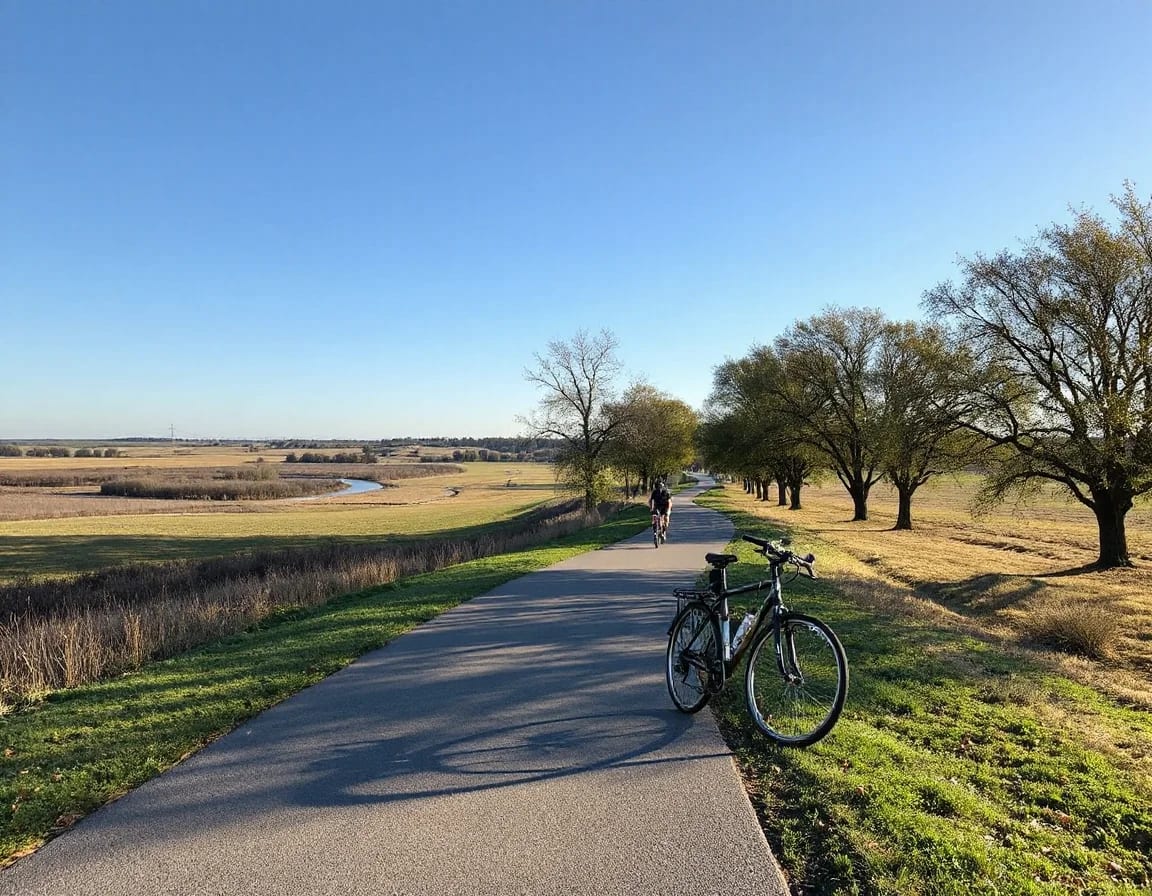
A trail on the map can be a meaningful everyday amenity, but its value depends on much more than distance. Before buying in Lenexa, compare the route itself, the way it connects to parks and streets, the property’s relationship to it, and the practical details you will notice after move-in. These five clues turn a quick map search into a sharper home-shopping tool.
A Trail Address Is More Than a Pin on a Map
Lenexa offers a mix of established neighborhoods, newer development, public parks, and trail connections that make outdoor access part of the local conversation. For some buyers, a nearby path is a welcome place for a morning walk, a bike ride, or a route toward green space. For others, it is simply a pleasant visual buffer from nearby streets. Either way, the best comparison begins by looking beyond a listing’s phrase “near trails” and asking what that actually means from the front door.

Clue one: measure the real route, not the straight-line distance. A home may be close to a trail corridor while the nearest access point requires a longer walk around a fence, across a busy road, or through several blocks. During a showing, use a map and, if possible, take the route on foot. Notice sidewalks, curb ramps, crossing signals, shade, grades, and whether the connection feels intuitive. A ten-minute route that is easy to repeat can be more useful than a shorter route with awkward crossings.
Clue two: identify where the trail leads. A short neighborhood loop serves a different purpose than a connected route with access to parks, ball fields, open space, or other parts of the city. Look at the full network rather than only the segment behind a property. A trail that links several destinations can add flexibility to everyday routines, while a quieter loop may be better suited to a brief outing close to home. Neither is automatically better; the fit depends on how you expect to use it.
Lenexa’s parks and trail system can also change the feel of nearby streets. Some routes pass through wooded areas or broad open lawns, while others run beside residential blocks, drainage corridors, or roadways. Visit at more than one time of day when possible. Light, traffic patterns, activity levels, and seasonal vegetation all shape the experience in ways that do not show up in listing photography.
The most helpful showing question is often simple: “Where would I enter this trail, and where could I go from there?” A clear answer is more valuable than a generic nearby-trail claim.
Compare the Property’s Relationship to the Route
Being adjacent to a trail and being near a trail are not the same condition. A property backing to a greenway may offer open views, fewer rear neighbors, or direct access through a nearby connection. It may also have a more public edge than a home several streets away. The goal is not to treat either arrangement as a universal plus or minus, but to understand how the setting works for the property you are considering.
Clue three: look at the boundary. When touring a home near a trail, step into the yard and observe the fencing, landscaping, elevation, and sightlines. Is the outdoor area visually open to the route, screened by mature plantings, or separated by a slope? Does the lot sit above or below the path? These details can affect privacy, drainage, maintenance planning, and how often the trail becomes part of the home’s daily view.
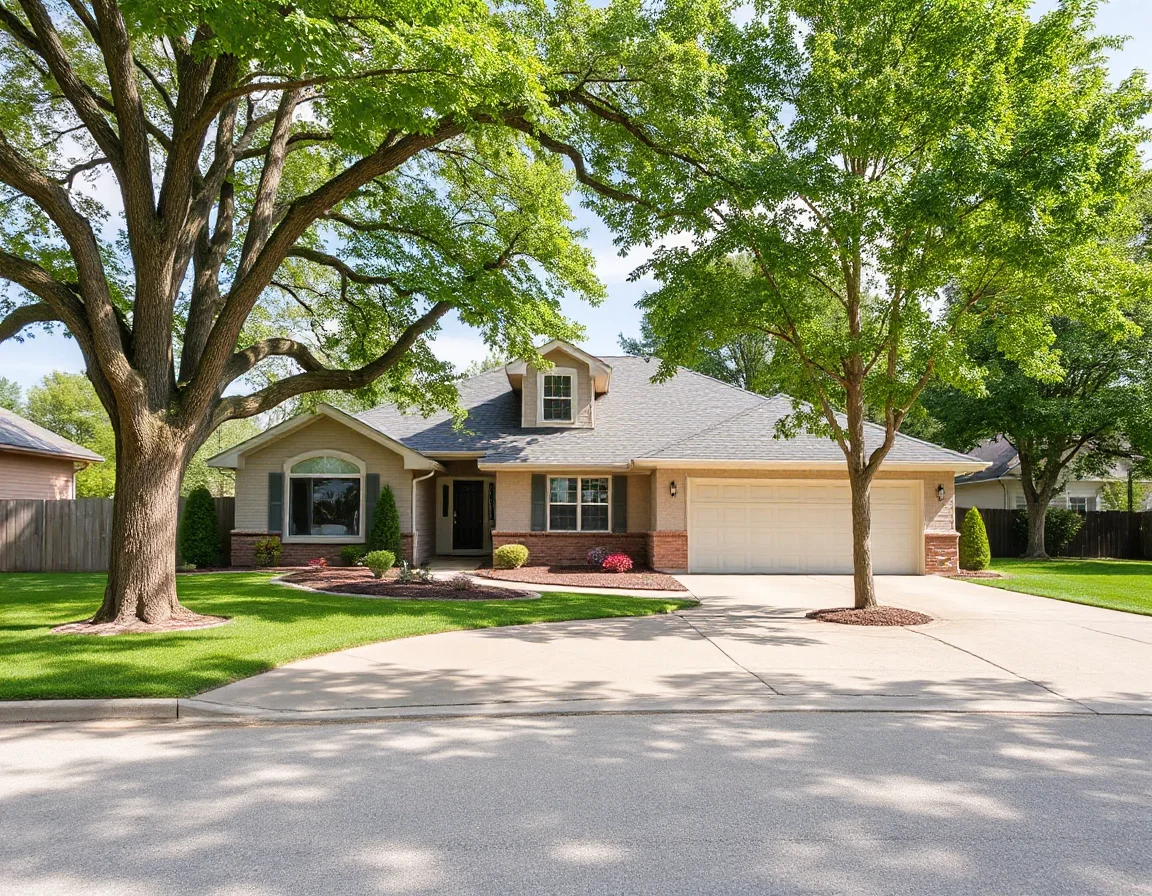
Take a moment to listen as well. A trail can bring the soft sounds of bicycles, runners, birds, maintenance equipment, or nearby road traffic depending on its location. Tour with windows open if conditions allow, and notice the rear patio, deck, and primary living areas. If a home is especially close to a public route, ask the seller’s representative or review available property documents for any easements, fence responsibilities, or drainage features associated with the corridor.
Clue four: study terrain and weather conditions. Lenexa’s rolling terrain can make one segment of a route feel very different from another. A path that looks level online may include grades that matter for cycling, mobility, runoff, or winter conditions. Look for low points, retaining walls, stormwater features, tree cover, and areas where leaves or snow may accumulate. These are practical observations, not reasons to rule out a home; they simply help create a more complete picture of ownership and use.
Seasonality deserves attention, too. In spring and summer, greenery can create a lush setting and additional shade. In late fall and winter, sightlines often open up, and the trail’s proximity may be more apparent. Buyers comparing several homes can revisit a favorite at a different hour or check satellite imagery and local maps to understand how the lot relates to the surrounding landscape year-round.
A backyard next to green space can feel entirely different from one beside an active path. Fences, elevation, landscaping, and windows matter as much as the distance shown on a map.
Read the Wider Lenexa Lifestyle Picture
Clue five: pair the trail with the rest of your routine. A trail may be one part of the decision, alongside access to parks, grocery options, libraries, dining, workplaces, major roads, and the services you use most often. Create a short list of regular destinations and test the drive or walk from each property. This keeps the search grounded in your actual schedule rather than a single amenity.
It is also useful to compare housing styles around the trail network. Lenexa includes a broad range of homes, from established properties with mature landscaping to newer construction with contemporary layouts. A trail-adjacent home might offer a larger lot, a newer patio, a walkout lower level, or simply a different streetscape than another option at a similar price point. Focus on the complete package: condition, layout, outdoor space, location, anticipated maintenance, and market value.
For sellers, trail proximity is best presented with precision. Instead of broad lifestyle promises, describe objective details: the distance to a public access point, the nearby park name, a visible greenbelt, a bike-friendly route, or the landscaped view from the yard. Clear information helps buyers evaluate the feature on their own terms and gives listing photos and showing notes a more credible foundation.
Make the Comparison Before the Offer
A thoughtful trail comparison does not require a complicated checklist. Walk the access route, inspect the property boundary, listen from the outdoor spaces, consider terrain, and connect the location to the rest of your routine. Bring those notes to each showing so that one attractive path or green view does not overshadow the other parts of the home that will matter over time.
Christopher Webb and Urban Cool Homes bring local Kansas City market experience to buyers and sellers evaluating Lenexa and communities across the metro. When you are comparing homes, the strongest choice is usually the one that makes the most sense in person, on the map, and in the daily details that follow closing.